Pet Loss & When Your Body Misses Them Before Your Mind Does
Part 1: Understanding somatic grief, habit memory, and nervous system responses after loss
The loss of an animal companion is not just an emotional experience. It is a full-body event. At some points, it takes over our entire worlds. Our bodies remember in ways our minds cannot yet name. When a cherished pet dies, the nervous system reacts with a deep, instinctual response rooted in connection, rhythm, and safety. This is why pet grief can feel physical, exhausting, destabilizing, and sometimes overwhelming.
Pet grief is real grief. Your body knows it. In truth, the nervous system does not differentiate between grieving a human or an animal. It simply registers profound loss and heartbreak.
It honestly took me six months to be able to candidly talk about how grief changed me. It cracked my heart wide open. It unraveled my soul. My nervous system was shot, and I couldn’t handle a single stressor, positive or negative.
In sharing my findings on nervous system regulation and grief, my hope is that this brings you comfort. Especially for the folks with anticipatory pet grief. If I could grieve all over again (not that I wish that on anyone), I’d choose to be more informed. To have a framework to go by and feel more supportive.
Through my own grief process, I was surrounded by some of the most loving friends, family, and even grief professionals. Somehow, though, I felt so alone. A lot of it, I not know, is because pet grief and loss is disenfranchised.
So this 3 part series is dedicated to the woman I was six months ago. The one that couldn’t fix her other animals’ meals because it reminded her there was one less bowl. The woman who cried herself to sleep for months. The woman who felt completely lost by saying goodbye to her identity as a “cat mom”.
If at any time this series is too much, overwhelming, or brings up buried emotions, just come back to it later. This is meant to be a working guide for anyone nearing or in the throes of pet grief. Empowering you with information so that you can build yourself back up again.
I see you crumbing because six months ago, I felt like I had lost a limb. Working with this framework allowed me the privilege of meeting my future self, my whole self.
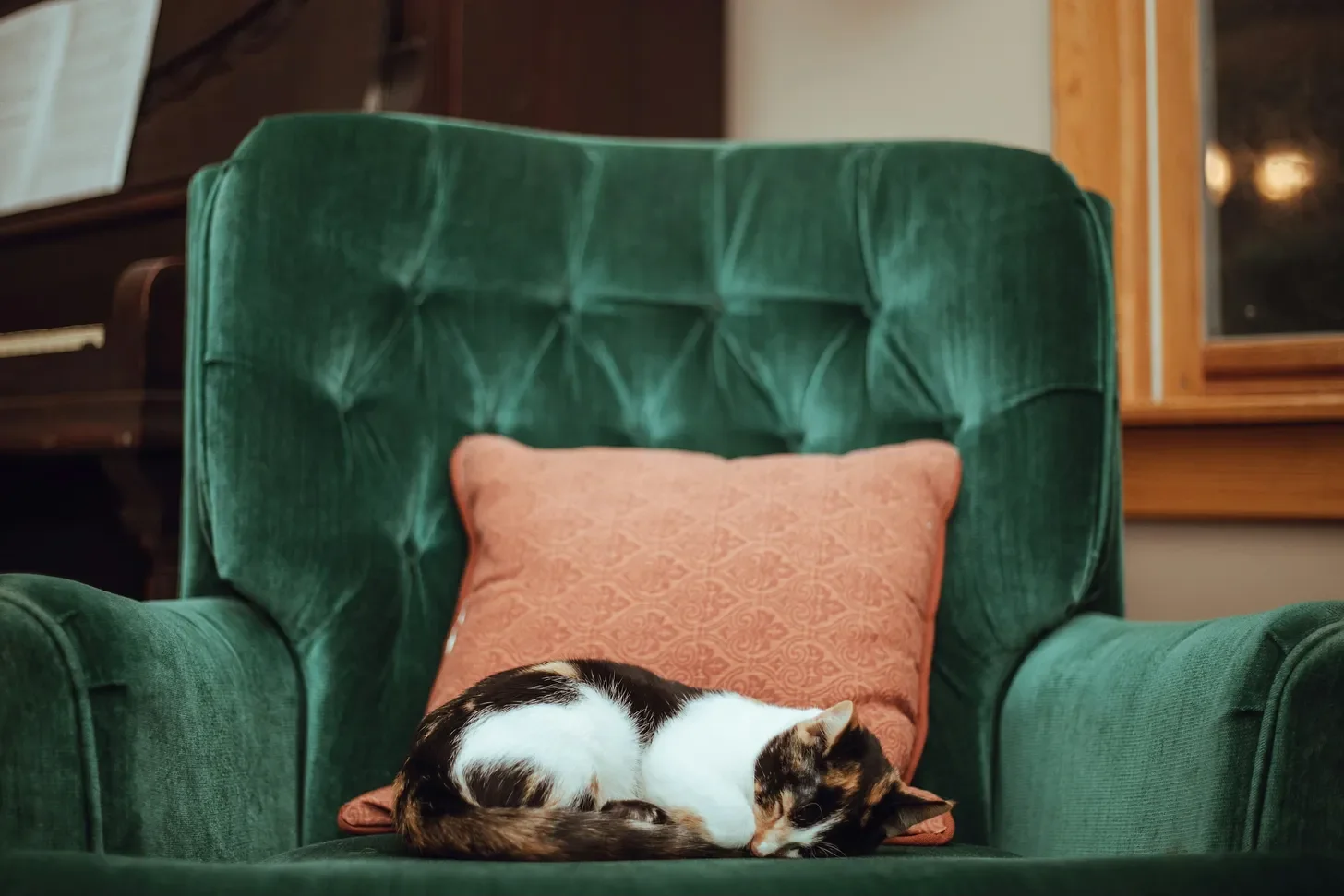
How pet loss shapes the nervous system at a biological level
The nervous system is designed to respond to connection and separation. Pets are our sources of safety, predictability, and emotional regulation. They greet us with love, share quiet moments beside us, and contribute greatly to our daily rhythm. When that bond is abruptly broken, the nervous system interprets the loss not as emotional, but as a threat to stability itself. Sometimes, you don’t even notice how entangled these strings of connection are, and when they’re gone, it’s truly shocking.
In response, survival mechanisms are triggered even though there is no physical danger present. Brain regions involved in attachment, emotional pain, and threat detection become highly active during grief. From the perspective of the nervous system, emotional loss and physical danger register similarly, both as stress.
This helps illuminate why pet loss can feel shocking, disorienting, or destabilizing. Each nervous system is shaped by personal history, emotional patterns, and past stressors. How grief affects you will be unique to you. Even if you consider yourself a stable person, if you have lingering unresolved stress, the grief can come on like a tsunami. It varies from person to person.
Pet grief and the sympathetic nervous system
The sympathetic nervous system supports mobilization and activation. It is often associated with what most of us call “fight or flight.” When loss feels shocking or destabilizing, this branch becomes highly engaged.
Common sympathetic responses to grief include:
anxiety or panic
racing thoughts
restlessness or agitation
tightness in chest or jaw
shallow breathing
difficulty sleeping
heightened alertness or hypervigilance
Even though the threat is emotional, the nervous system responds as if something essential has been taken away. In early or acute grief, sympathetic activation is very common. The body is orienting itself to a world that suddenly feels unfamiliar. The shock can be overwhelming, so making sure you’re aware that stress can present this way helps you further incorporate different techniques to make space for it.
Pet grief and the parasympathetic nervous system
The parasympathetic nervous system is often described simply as “rest and digest,” but that wording doesn’t quite encapsulate the entire function. It also supports conservation, collapse, and shutdown when the body feels overwhelmed or depleted.
During grief, parasympathetic immersion may look like:
deep exhaustion or fatigue
emotional numbness
heaviness in the body
difficulty finding motivation
withdrawal or isolation
foggy thinking
slowed movement or speech
This state is not relaxation. It is a protective collapse. When the experience of loss feels too large to process all at once, the nervous system may conserve energy by slowing everything down. Many people mistake this response for the inability to cope. In reality, it is the body protecting itself from overwhelm. You can feel like a ghost in your own home, a shell of a body. Keeping up with conversation can feel impossible. Especially in the early days, it’s important to keep in mind how much your body is processing.
Stress hormones and nervous system activation after loss
Grief also activates the body’s stress response system, often referred to as the HPA axis. This network governs the release of cortisol and other stress hormones.
After loss, cortisol patterns can become disrupted. Instead of rising and falling gently through the day, these rhythms may become irregular or elevated. This shift contributes to fatigue, anxiety, sleep changes, and digestive shifts. This is what I refer to as the “wired but tired” phase.
Some of us start to panic and think to ourselves that something is wrong with us. Nothing is wrong, and this is an anticipated response. It’s evidence that your body is working very hard to make meaning of loss. It is difficult not to be hard on ourselves while grieving. Once simple tasks can feel heavy. Small stressors can feel magnified. Things get compounded, and tasks you were once able to handle become too much to bear.
During the wired and tired phase, is when I feel like the brain really gets aggravated. Intrusive thoughts like bargaining and timeline scattering really take over. It’s like the moment you sit down to rest, the brain gets to worrying. This is a normal part of the process, too. One that I personally wish I were better prepared for.
Conversations can get heated quickly. Normal routines can become totally disrupted, like making yourself meals or getting ready for bed at night. There’s no one way that you can expect grief to hit. It changes from person to person, and even then, it changes every day.
Please remember: your body is doing the best it can. Moving through early pet grief calls for compassion. It’s making things as easy as you can for yourself. Again, this looks different for everyone.
Emotional regulation grieving pets
For many of us, our animal companions are our emotional regulators. Through touch, presence, and routine, they help calm the nervous system. Their absence creates a gap in the regulatory rhythms you may not have noticed until it is gone. Bringing them to bed, fixing their food in the morning, and greeting them when you’re home. When these moments get broken, it sometimes starts the grief process all over again.
This often shows up as:
heightened emotional sensitivity
sudden waves of sadness or panic
difficulty concentrating
feeling on edge or easily overwhelmed
Emotional regulation isn’t just mental. It is physiological. Losing a key regulatory relationship alters the everyday landscape of the nervous system. The silence can feel deafening. The rhythms that once grounded you feel undone. In the beginning, it makes it feel like your entire world is upside down. Believe me, I know.
Attachment, yearning, and nervous system memory
Attachment doesn’t end when a pet dies. The nervous system continues to expect voices, steps, shared spaces, and routines that are now absent. For many of us, these experiences are baked into our household routines and habits for well over a decade. It’s normal to see them in their usual spots and to be shocked when they’re not next to you.
This is why yearning, longing, and sudden emotional surges are common in ongoing grief. It’s an ebb and flow that is violent but also surprising. It takes you through every emotion at once, and somehow, none of them at times. Learning to recognize the hollowness is just as important as feeling when your eyes well up. Sometimes, we just miss them, and that’s okay.
Even years later, you’ll catch yourself cleaning, and you’re hit with a wave of grief. Tidying behind dressers and finding some of their hair in the dust bunnies. Going through the closet and finding their toys that you stowed away. It’s hard, especially in the beginning. But it’s also normal if it’s difficult years later, too.
Neuroscience research shows that loss activates similar pathways in the brain as physical pain and social rejection. The absence of a loved companion truly registers as an interruption of connection. Memories, habitual routines, and quiet moments can trigger intense physical and emotional reactions long after your pet has passed.
What this means for healing after pet loss
Healing from pet loss does not mean eliminating grief. I truly hope you never feel like you have to totally eliminate this feeling. I know for me, in the early days, I kept asking myself, “When will this feeling stop?” And truthfully, it doesn’t stop; it’s not something that goes away. It is, though, something my body has come to realize. A truth, albeit destabilising, that I now understand is just a fact of life. We often sign up for this moment without ever realizing its depth. We sign our name on the adoption papers and don’t think of the way life will look decades later. Working with pet loss means supporting the nervous system so it can gently and safely process the loss as a whole.
Because pet grief lives in the body, healing often unfolds through more than thinking or talking. Tender, body-based supports help restore a sense of safety and regulation.
Your grief is not something to fix. It is something to tend. Giving it space, care, and acknowledgment makes all the difference.
Continuing care for yourself during pet loss
If the weight of pet loss feels too heavy to navigate alone, compassionate, whole-body support is available.
I offer care that honors the depth of your bond and supports your nervous system through loss. Support may include:
One-on-one pet grief support sessions via A Bond Beyond Words, exploring soul bonds, transitions, and grief cycles
Nervous system regulation through breathwork and gentle movement (coming soon)
Herbal guidance to support heartache, sleep disruption, anxiety, and exhaustion (added onto my 1:1 readings)
Ritual, remembrance, and honoring practices for your pet’s life
Click here to book "A Bond Beyond Words"
This work is slow, respectful, and trauma-informed. There is no timeline and no pressure to “move on.” If you long for support that sees your pet grief as real and deserving of care, I invite you to explore working together.
I’ve worked alongside animals for well over 10 years in veterinary medicine, animal care, and animal advocacy. I’ve sat alongside over 100 people while they walked their animal companions to the other side, said their final goodbyes, or asked me to do it for them when they couldn’t be present.
Oftentimes, you have a general idea when this day of loss might come. Sometimes it’s a hospice situation, and other times, it’s more emergent. Having someone on your team who understands how health can progress or how emergencies happen makes a difference. The set and setting change everything for how we remember these final moments. And, how we remember ourselves while we walked the path of departure.
Click here for personalized support
Writing Seasons of Self is one of my favorite parts of my week! It also takes me an embarrassing number of hours to put these together. If this newsletter has become a cozy ritual for you, here are a few easy ways to support this free space:
💚 Tap the heart or leave a comment — it truly helps!
📱 Screenshot your fave part & share on IG stories tagging @the.cosmic.craft
💫 Share this blog with anyone who may enjoy it!
About the author

Hi, I’m Courtney, the voice behind Seasons of Self and the owner of The Cosmic Craft. I’ve been featured in printed publications & popular online platforms like Yahoo!, Bustle, and Pride. I am an astroherbalist, educator, and guide offering whole body support for life’s moments of departure. My work centers on grief, change, and the tender thresholds we cross when something we love ends or transforms, including the loss of animal companions, relationships, identities, and familiar ways of living. Through astrology, plant wisdom, breathwork, and gentle movement, I help people slow down, listen to their bodies, and learn how to stay present with what is leaving and what remains.
References
Below are studies and educational resources exploring how grief impacts the nervous system and brain. While not all focus specifically on pet loss, they help explain the biological mechanisms of grief.
Neurobiology of grief and emotional pain
https://pubmed.ncbi.nlm.nih.gov/24923337/Stress hormones and bereavement responses
https://pubmed.ncbi.nlm.nih.gov/32754965/Attachment, closeness, and grief severity
https://pubmed.ncbi.nlm.nih.gov/26766186/How the brain processes grief and loss
https://www.scientificamerican.com/article/how-the-brain-copes-with-grief/