Darkness can be restorative | Understanding the shifts Saturn demands and the healing power of difficulty.
Notes from the season
I still feel as though I’m receiving the energy of the new year. Not because I mark January as my new year, I’m one of those people who feel that the beginning arrives with Aries season. Still, I recognize this time as an invitation to turn a page. I simply do so more quietly and subtly. The fireworks, momentum, and clarity come naturally to me in Spring. Until then, I’m listening closely to what the darkness has to teach, just as Capricorn, ruled by Saturn, would ask of us.
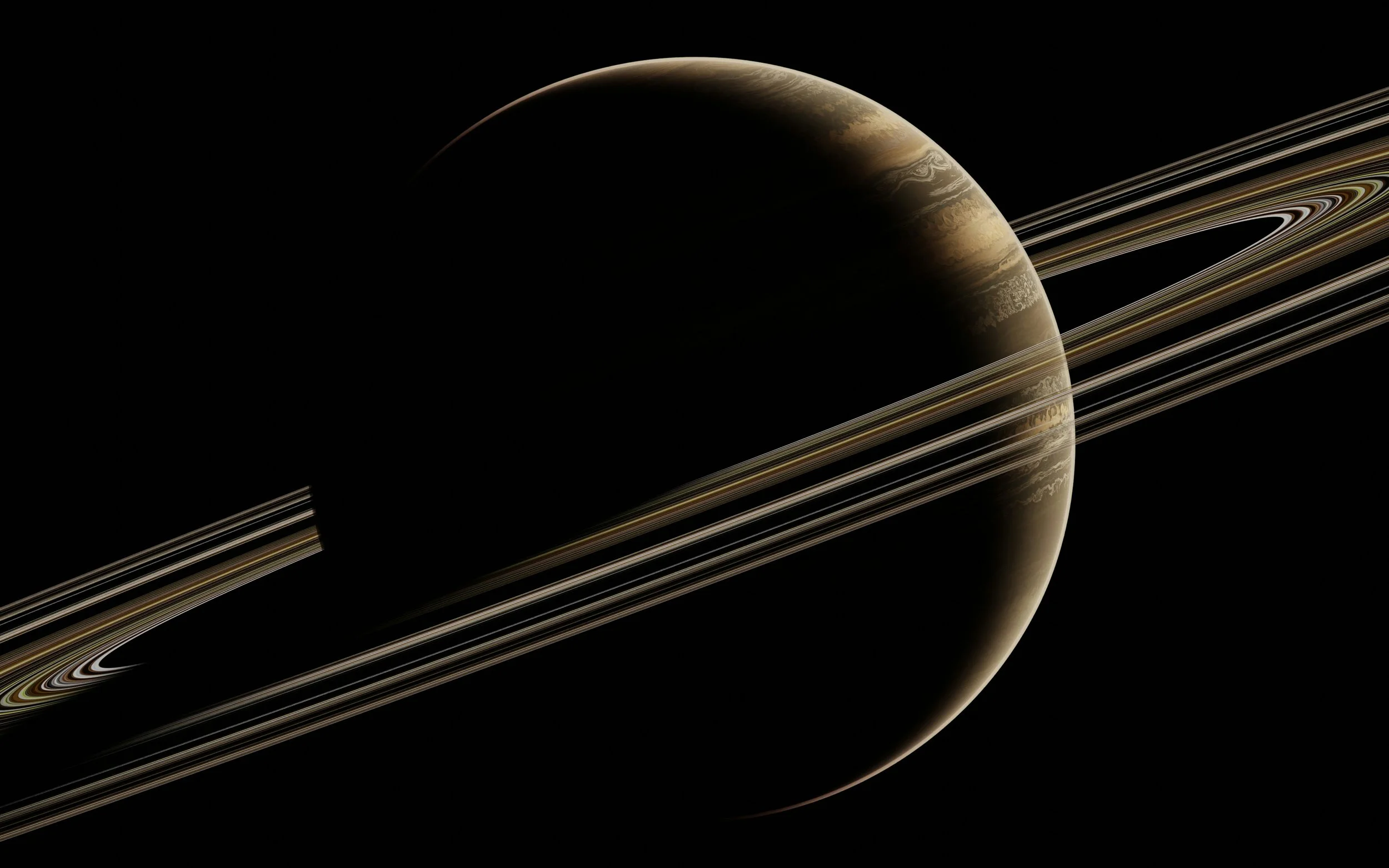
As someone who has a natal 12H placement, I’m widely familiar with the unseen, unconscious, and tougher aspects of life. Pair that with over 3 Aquarius placements (Aquarius being ruled by Saturn), and you get someone who’s not just familiar with the darkness, but has a working relationship with it. It’s something I’ve been watching unfold throughout my life, karmically putting me through the wringer that way I could end up exactly where I am. A weird thing to be grateful for, but hey, it’s in my nature.
Darkness, stillness, and discomfort have signatures that are loud and clear. This makes it that much easier to listen; however, it’s easier said than done. Listening to these pings can bring up a lot, but almost every time I’ve leaned into Saturian energy, I’m rewarded, which I notice rings true for folks who have heavy Saturn & Capricorn placements in their chart.
These are 3 lessons that Saturn has taught me during our current Capricorn season thus far.
Listen to discomfort in the body before it has to scream at you for a response.
In choosing stillness, especially when all we want to do is run or fawn, we gain control over our circumstances. We learn to act instead of merely react.
Darkness can show you exactly where the light sits in your life, it’s just not always obvious.
Pet care done lovingly under Saturn’s rule: Caring for animals, especially cats, carries a deeply Saturnian quality. Pet guardianship asks us for responsibility, attentiveness, and long-term commitment, all hallmarks of Saturn’s domain. As guardians, it is our duty to notice subtle shifts in our animals’ behavior and comfort, and to respond promptly when something feels off. Saturn teaches us that care is not passive; it is watchful, steady, and rooted in accountability.
In some astrological traditions, cats are linked to Saturn because of their reserved, disciplined, and occasionally aloof nature. These traits echo Saturn’s themes of boundaries, structure, and self-containment. Folklore even paints them as mysterious “beings from Saturn.” When we attune ourselves to our feline companions, we are engaging directly with Saturnian energy.
Cats ask us to earn their trust through consistency and respect. They move comfortably through darkness, both literal and symbolic, and communicate discomfort in quiet, easily missed ways. Honoring a cat means learning to observe closely, act responsibly, and protect what has been entrusted to us. This, too, is Saturn’s work: guardianship expressed through devotion, patience, and care.
The sky unfolds
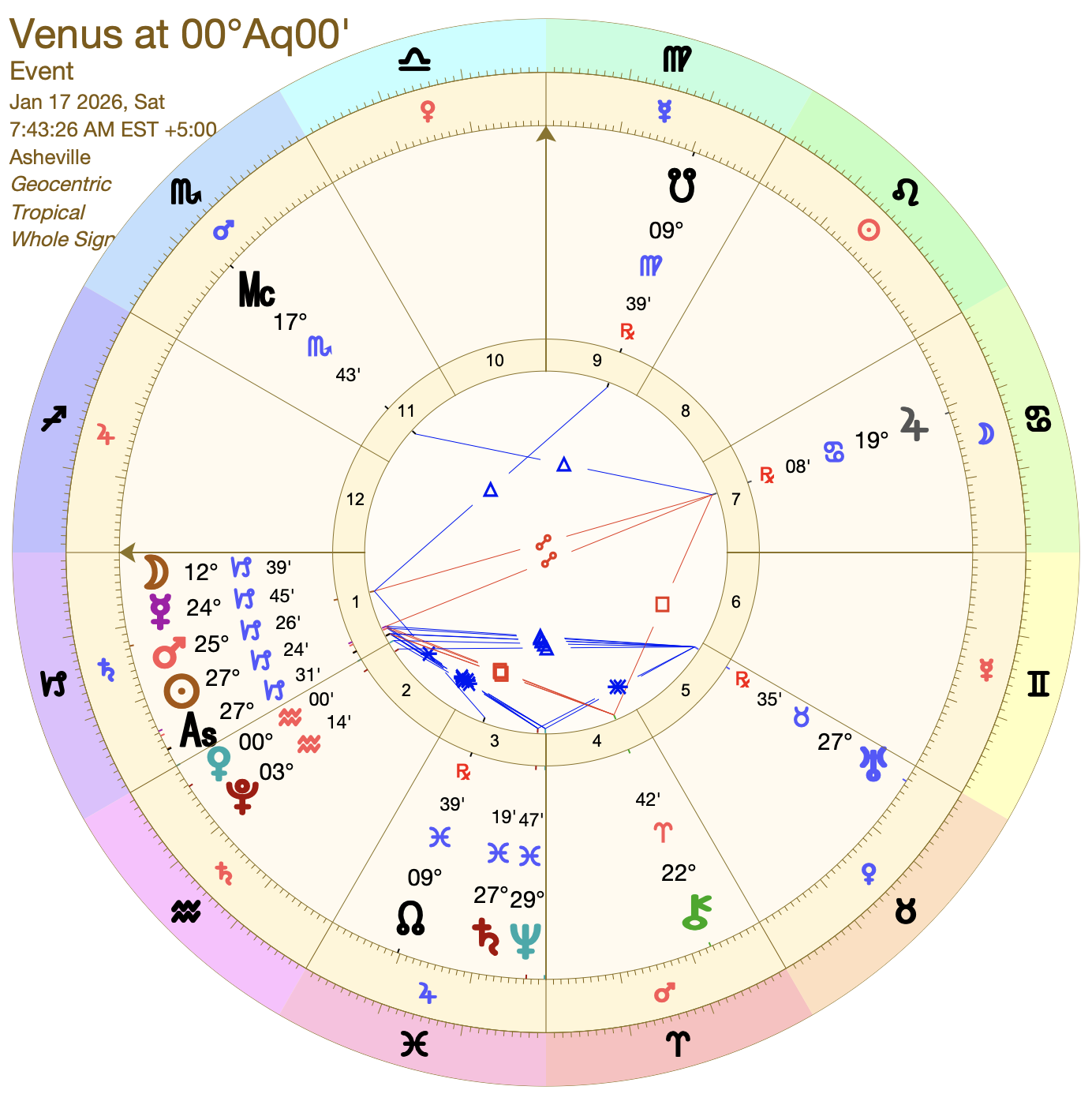
January 17th, Venus moves into Aquarius - Don’t be disappointed when others fail to soar to great emotional heights, or fall off the pedestal you’ve placed them on. Remedy this by making sure you’re giving your loyalty and commitment to the right person.
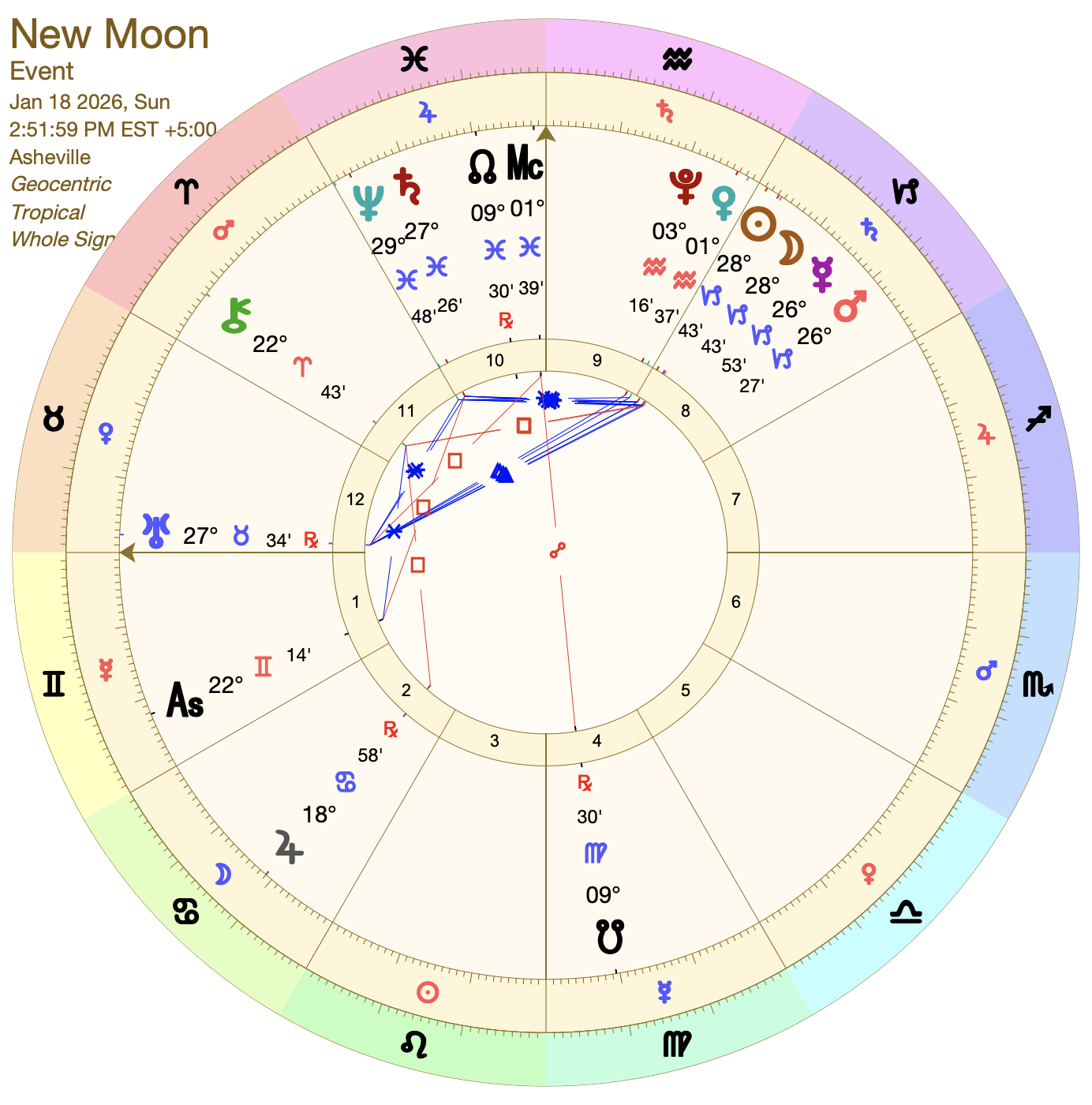
January 18th, New Moon in Capricorn - Lead your words with kindness, or silence this lunation. In your head, you’re just being honest. But know that the recipient of your words is met with a chilling coldness that’s difficult to unwrap.
👉 Remember, if you’re looking to go deeper with astrology, I have a free group chat on Instagram, where I give astrology transit updates multiple times a week!
Plant wisdom
Depleted Saturn in the birth chart
A deficient Saturn shows up as a lack of structure, stability, and containment in the physical body. Because Saturn governs bones, teeth, minerals, and the body’s foundational framework, deficiency often presents as weakness rather than excess. This can look like low bone density or osteoporosis, frequent aches in the joints, fragile teeth, or a general sense that the body lacks strength or endurance. There may be recurring mineral deficiencies, especially magnesium, reflecting an inability to properly build or maintain long-term reserves.
On an energetic level, a depressed Saturn in the chart often feels like heaviness without strength. Instead of grounded steadiness, there is lethargy, fatigue, and difficulty sustaining effort over time. The body may tire easily, recover slowly, or struggle to hold form and posture. Rather than Saturn’s healthy discipline and resilience, there can be a sense of depletion, fragility, or collapse of boundaries, both physically and energetically.
Emotionally and behaviorally, deficient Saturn can manifest as difficulty maintaining routines, inconsistency in self-care, or avoidance of responsibility because the internal resources simply are not there. The issue is not laziness, but exhaustion of the systems that provide support. In this state, Saturn does not need restriction or pressure. It needs nourishment, mineralization, rest, and slow rebuilding so structure can be restored from the ground up.
Leaning into ancient roots with Horsetail
Horsetail is often called the “ringed plant,” its jointed stems marked by visible bands that speak to time, repetition, and structure. Its morphology is stiff, coarse, rigid, and dry, offering a clear lesson in boundaries and endurance. This is not a soft or yielding plant. It teaches strength through containment and slow, steady accumulation.
Exceptionally rich in minerals, horsetail is especially high in silica, supporting connective tissue, hair, skin, nails, and bones. Its presence in the body encourages integrity and reinforcement, helping rebuild where wear, weakness, or depletion has taken hold. As a diuretic, it supports the gentle drainage of excess water, helping bring balance to the water element, a domain often associated with Saturn’s regulating influence. Its astringent, tonic nature strengthens lax tissues and restores tone.
This is an ancient genus, one that has existed largely unchanged for hundreds of millions of years. Working with horsetail invites a connection to ancestral patterns and deep time, offering medicine that operates quietly and persistently rather than quickly or dramatically.

Horsetail (Equisetum arvense)
Mineral-rich tonic and diuretic. Energetically cooling, drying, and astringent. Especially supportive for connective tissue, bones, hair, skin, and nails due to its high silica content. It strengthens lax or weakened tissues and supports the gentle drainage of excess fluid, working slowly and steadily over time
This is just a taste of herbal wisdom. For advice specific to your body and health, check in with a qualified herbalist who resonates with you — and my waitlist is open if you’d like to work with me personally.
Supporting your inner landscape
When was the last time you intentionally made space for yourself? Do you feel nervous or anxious at the thought of daily meditation before you even begin?
There’s a lot of research showing meditation can help with stress and anxiety. Studies find that regular mindfulness meditation can reduce anxiety symptoms moderately compared to no treatment after about 8 weeks of practice. Studies also suggest meditation may improve sleep quality, though evidence varies by population. And research using meditation apps shows that people who build consistent daily meditation habits are nearly three times as likely to report improved mental health compared with less consistent users. Spiritually, I feel like it’s necessary in building a foundation that is equipped to hold your more sacred thoughts and psychic intuitive pings.
If meditation feels appealing and you want to invite it into your life, it can become something real and sustainable.
Try these 5 practical steps
Use a timer or app. Insight Timer or Calm can help you check in, stay accountable, and explore guided meditations for specific outcomes.
Stack it onto an existing routine. Habit science shows that linking a new behavior to a stable daily cue increases the likelihood it will stick. For example, meditate right after brushing your teeth or after morning tea.
Start slow. Begin with just 2 minutes a day the first week and increase by 2 minutes each week. Short, consistent practice builds confidence and helps longer sessions feel natural (this is how I built up to a 45-minute practice.)
Track outcomes. Use a symptom tracker like Bearable (my favorite of all time) to see changes in sleep, focus, mood, and motivation. Tangible data makes it easier to maintain the habit.
Be gentle with yourself. Missing a day occasionally is normal. Long-term consistency matters more than perfection.
Reflection pond
Soft questions designed to help you listen inward, honor your timing, and engage with the season in a meaningful way.
Right now is the perfect time to reflect on everything and anything that might be giving you some energetic pushback. Examine where it’s coming from, and if it’s something you’re actively trying to push through, or something you’d be better off entirely walking away from.
Open invitations
My next Roots & Remedies Virtual Plant Circle will take place on January 17th at 1 PM EST. In this gathering, we’ll sit with Ginger (Zingiber officinale), exploring its physical, emotional, and energetic gifts. This is a space to connect with the plant, with yourself, and with a community of plant lovers through reflection, meditation, and experiential practice.

This circle is for anyone who feels called to step into a deeper connection with plants. You do not need prior herbal knowledge—simply your curiosity, presence, and willingness to explore.
Each session offers a gentle blend of learning, contemplation, and sharing. You’ll leave with not only practical herbal insights but also an invitation to notice how these remedies show up in your own life.
Reserve your spot here: The Cosmic Craft – Roots & Remedies Circle

Writing Seasons of Self is one of my favorite parts of my week! It also takes me an embarrassing number of hours to put these together. If this newsletter has become a cozy ritual for you, here are a few easy ways to support this free space:
💚 Tap the heart or leave a comment — it truly helps!
📱 Screenshot your fave part & share on IG stories tagging @the.cosmic.craft
💫 Share Seasons of Self with anyone who may enjoy it!
📌 Want to partner with me? Reply to this email and let’s chat!
About the Author

Hi, I’m Courtney, the voice behind Seasons of Self and the owner of The Cosmic Craft. I’ve been featured in printed publications & popular online platforms like Yahoo!, Bustle, and Pride. I’m an astroherbalist, educator, writer, and guide devoted to helping people & their pets navigate life’s changes with more steadiness and self-trust. Rooted in seasonal living, astrology, and plant wisdom, my work is shaped by a deep belief that growth happens in cycles, not straight lines. Through this newsletter, I share reflections, tools, and practices that support renewal and transformation, all while honoring accessibility, curiosity, and care. This is a space for slowing down, listening inward, and learning to live in rhythm with your own timing.
Seasons of Self is sustained through repriocity rather than obligation. If you have the capacity and feel nourished by this work, you’re welcome to support it through a heart-centered donation or yearly offering. If not, your presence here is enough.
References:
Mindfulness-based therapy: A comprehensive meta-analysis. Clinical Psychology Review
Mindfulness meditation for insomnia: A meta-analysis of randomized controlled trials. Journal of Psychosomatic Research
Review and evaluation of mindfulness-based iPhone apps. JMIR mHealth and uHealth,
Healthline. Horsetail: Benefits, Uses, and Risks.
Diuretic effect of Equisetum arvense (horsetail) in healthy volunteers: a randomized trial. PubMed
Alice Sparkly Kat. Cats, Dogs, Mars, Saturn.
Silica in horsetail (Equisetum) assessed by electron microscopy and X‑ray microanalysis. PubMed